


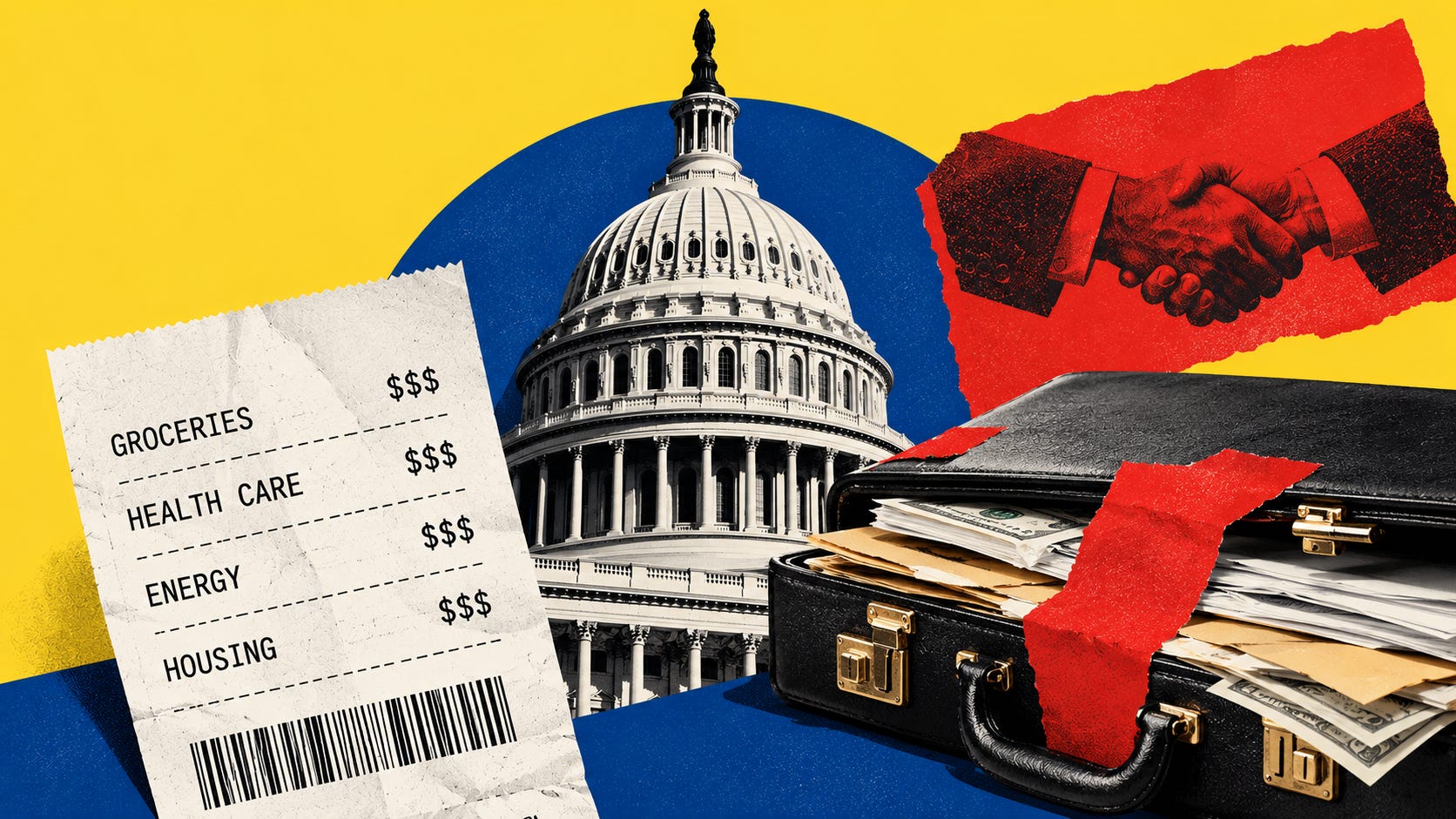
This time last year, very few people thought Democrats had a shot at winning back the Senate. But a week out from Election Day, groups like Senate Majority PAC aren’t just competing in must-win states like Maine and Minnesota. They’re putting real money into flipping Republican strongholds like Mississippi and Kansas.
This week, I spoke with SMP Communications Director Lauren French about how we got here, what’s resonating with voters, and the “cost of corruption” message Democratic candidates are closing with in some of this year’s most closely watched races.
Voters have been angry about a “rigged system” for as long as I’ve been in or around politics. I loved hearing Lauren’s take on how Democrats are finally meeting those voters where they are.
THIS IS ON BACKGROUND:
6 short questions. 6 quick answers. Featuring the wisdom of Senate Majority PAC Communications Director Lauren French.
We’re a week out from Election Day. What’s your closing argument? Is there a Senate campaign making a version of it that you think is worth highlighting?
The cost of corruption. People are paying more for groceries, health care, electric bills, and they’re exhausted. Then you look at the Republicans running for Senate, and you see people who have spent their entire careers making sure their donors or themselves come out ahead.
So the choice is pretty simple. Do you want a senator who works for you, or one who works for himself and the people writing him checks? That’s the argument we’ve been making all cycle, and it’s the one we’re closing on.
If I had to point you to one campaign doing a version of this really well, it’s Josh Turek in Iowa. Iowa’s cancer rates are some of the worst in the country, and they’re still climbing. It’s not an abstract statistic. In focus groups, we hear time and time again that everyone in Iowa knows someone who’s been through it, whether that’s a parent, a neighbor, or a kid. It’s a striking problem.
And yet, Ashley Hinson has taken money from the industries making people sick, and she’s pushed for the deregulation of the chemicals linked to the cancer crisis. Then she voted for the largest Medicaid cuts in history and made health insurance harder for people to afford. That’s what corruption looks like when it lands on your kitchen table. It isn’t a scandal you read about once and forget.
I’d love to know how you got to the ‘cost of corruption’. And if there were earlier message iterations that you all had to work through.
Early in 2025, it was already obvious that costs would drive this cycle. It was the first thing out of everyone’s mouth in every state we work in, whether we were looking at polling, focus groups, or just talking to people.
But “things are expensive” isn’t an argument. Everyone agrees, and it doesn’t tell anyone why they should vote one way or another. So we kept pushing to the next question: Why is this happening, and who’s responsible?
From early 2025, our research team kept digging into the Republican field, and we started seeing the same thing in race after race. Candidates who had used their offices to look out for themselves, their friends, and their donors. At some point it was clear that was the story. These aren’t isolated problems. It’s a pattern, and it explains why people’s costs keep going up while nothing gets done about it.
What struck me was how little it took to convince people. They already feel like the system is rigged against them. Once you show them exactly how it’s rigged, who benefits, and what it costs their family every month, it stops being a vague frustration and becomes a real choice.
Is there a race where SMP has done work that you’re particularly proud of? What’s been the impact on the race?
Maine, without question.
Susan Collins has gotten a pass for years. She built a brand as the reasonable one, the independent voice, and for a long time nobody seriously checked that brand against her actual record. Making her answer for her corruption, plainly and with receipts, is something I’m really proud the broader team did. It’s not easy to take on someone who’s been in office that long and has that kind of reputation. But we went in early with communications on her corruption and never stopped. And it’s changed how people talk about that race.
More broadly, I’m proud of how we approached this entire cycle. We decided going in that we’d try new things and take risks.
We’ve had creators drop opposition research to audiences who would never open a press release in their lives. We’ve put polling out through new voices instead of the same handful of outlets. We’ve shown up everywhere Republican candidates went, so our side of the story was always in the room. Immense credit goes to the research, political, and digital teams at Senate Majority PAC for their work, which absolutely changed narratives and conversations in these races.
What race are you watching most closely on election night?
Every single one of them, and I really mean that. I know it sounds like a dodge, but it’s the honest answer this year.
Part of it is just the nature of this map. In a normal year, you’d have a couple of races everyone treats as the main event and a few more that are long shots. That’s not what this year looks like. We’re competing in places many people wrote off at the start of the cycle, and yet they’re still on the board a week out.
So on election night, I’ll be doing what everyone on our team will be doing: refreshing results from a lot of different states at once and probably not sleeping much. I’ll be watching the early returns, watching turnout, and waiting to see if the work we put in shows up in the numbers.
What do you want to shout from the rooftops?
How close these races are.
Step back and look at the map. We’re competing in states that Donald Trump won by double digits, some of them by more than 20 points, and those races are coming down to the wire. If you had told me two years ago that this is where we’d be a week out, I’m not sure I would have believed you. These weren’t supposed to be competitive, and Republicans certainly didn’t plan on having to defend them.
That tells you something important. It tells you how badly Republicans have misread what people are going through. But these races aren’t decided yet. Every vote in every one of these states will matter, and that’s not a cliché this year. And most of them are still honest-to-God toss-ups.
Anyone doing something smart this cycle we should talk to?
Senate Majority PAC is walled off from the official campaign apparatuses, so I can only say this from afar. But I’ve really appreciated the excitement the Ossoff campaign has injected into its video content, how well the Talarico campaign has used cinematic ads to really capture a sense of change, and how the Colom campaign has turned out some of the best ads and video content of the cycle. There are many more, but we’re really seeing campaigns embrace video content in new ways that are breaking through more and more.
Thanks so much for your time, Lauren.