


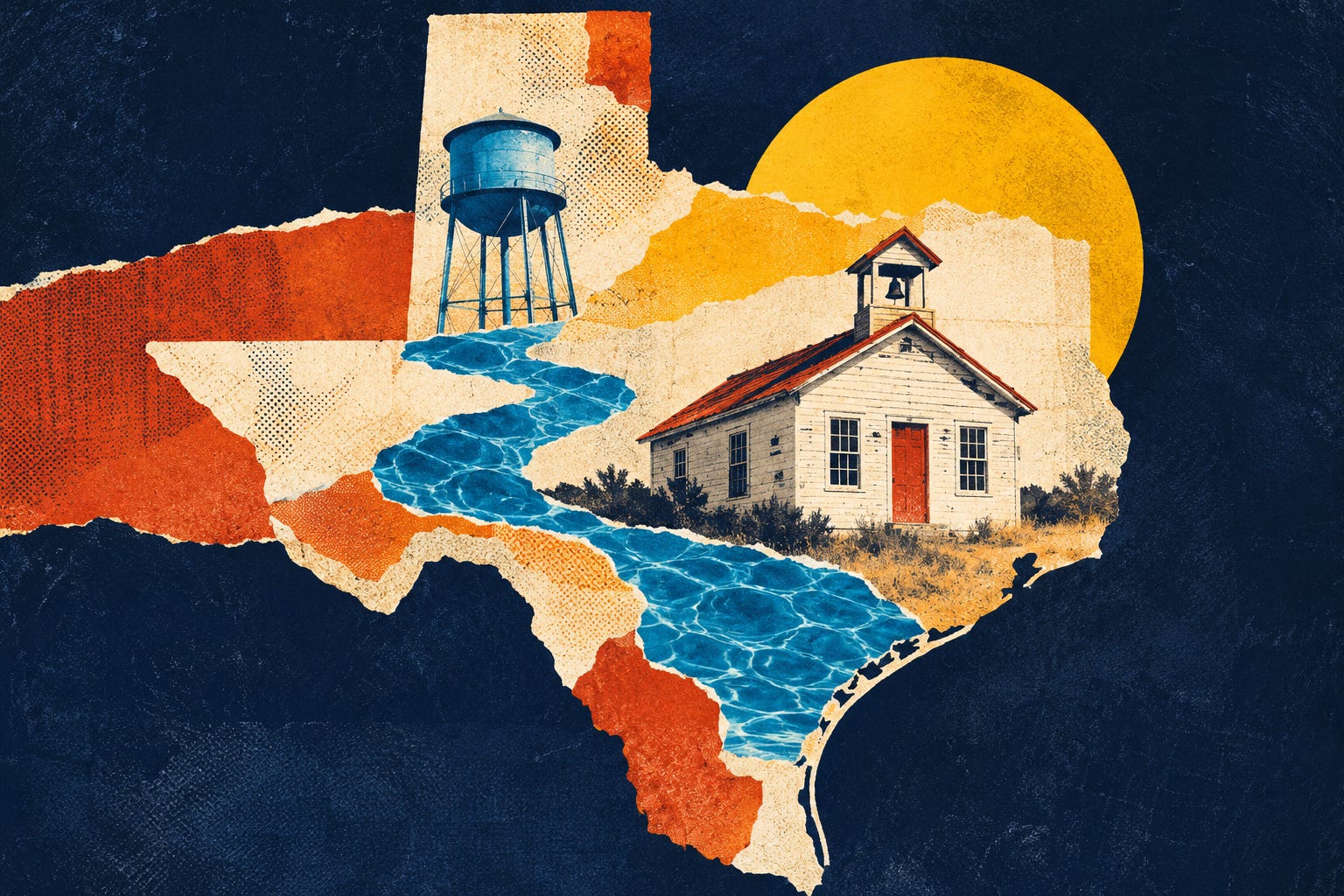
As a born-and-bred Texan, I don’t think I’ll ever get tired of telling people that I’m from a blue state.
And as someone who loves learning about well-run campaigns, I know I’ll never get tired of hearing more about Gina Hinojosa’s campaign for governor of Texas.
This week, I had the pleasure of connecting with Tommy Kubitschek, communications director for Gina for Texas, about how Hinojosa’s team elected Texas’ first Democratic governor in 30 years while being outspent $300 million to $37 million.
As Tommy points out, the stakes are bigger in Texas. And as you’ll read below, so are the risks the Hinojosa campaign had to take. From spending multiple days off the campaign trail learning about Corpus Christi’s water crisis to building alliances with MAGA moms furious about the state of Texas’ public schools, Hinojosa’s team ran a race that looked nothing like many of the “blue tsunami” campaigns getting attention across the country.
I hope you learn as much from Tommy’s insights as I have.
THIS IS ON BACKGROUND
Five short questions, five quick responses featuring the wisdom of Tommy Kubitschek, Communications Director for Gina for Texas.
Texas has 20 media markets. And you had 17 other statewide races and countless competitive congressional campaigns on the ballot alongside y’all. How in the world did you devise an earned media plan to introduce your candidate and get her message out to voters?
Texas really is massive! Dallas-Fort Worth and Houston alone are the 4th and 6th largest DMAs in the country, and we knew Greg Abbott was going to outspend us, which is why no one wanted to run against him. We knew early on that paid media alone wasn’t an option, so we found ways to reach voters in the most creative ways possible. This campaign was a big bet, and winning meant taking real risks, so we hired some of the hungriest communications staff out there. At one point, the paid media budget gap hit nearly $14 million, and earned had to carry more of the load than usual.
That meant saying yes to everything. Every hit in Houston and every headline in El Paso was a dollar we didn’t have to spend. We had a very clear path to victory for turnout, and our balance of time spent in the major markets reflected that, but we also had to go beyond that if we wanted to unseat a three-term incumbent. That meant making news in every market we could, every week. We opened the firehose as much as we could on the major markets, and then ran up the score anywhere else that would take us.
In practical terms, our comms plan came down to three things: building press events and rollouts we knew would make a splash because they were such a radical departure from the status quo, localizing our core message for every market, and showing up everywhere.
Take our plan to send every Texas household a $1,500 check out of the overflowing rainy day fund. It was a populist idea: right-sizing government and putting the money back in people’s pockets. It got attention while also reflecting Gina’s commitment to rebuilding trust in government through bipartisan priorities.
Then we localized it. On our Money in Your Pocket Tour, we made sure we talked about it differently in every market: a grocery store press conference in Houston, a stop at a small tamale business in San Antonio, and a roundtable with experts on tariffs and port-of-entry politics in Laredo. We did the same on every issue. In Corpus Christi, we talked about the water crisis; in Houston, school takeovers; and everywhere, data centers, because they were popping up… everywhere.
And above all, we showed up. Gina worked extremely hard to get it done – she was either dialing for dollars or talking to an influencer or traveling somewhere to make news. We did every gaggle we could pull together, we fit studio visits into every gap in the calendar, and we found the local influencers who could get Gina into people’s feeds. During these blitzes, we learned that Abbott hadn’t talked to most of these reporters in years, and just showing up was, in fact, a Big Deal. Just by showing up, Gina was making herself relevant in the lives of people far from her home district, AND we were talking about issues that their readers and viewers actually cared about. I liked to say during the campaign that Amarillo (where we talked most about data centers) is Gina Country™ – and because we showed up and ran an all-of-the-above earned media strategy, it was true in the results!
I’ve found that one of the toughest parts of “red state” comms is convincing in-state reporters that your candidate has a shot and that your race is worth taking seriously. Did you have that challenge? And how did you confront it?
Oh god yes! The first round of reporter coffees in January was BRUTAL. Many of them saw Gina as a sacrificial lamb to run against Abbott, even though they had covered her for years in the Texas House and knew she was a good communicator who was worth covering. Even as our follower count grew, thanks to our world-class creative team, and polling showed us closing in, there was a lack of curiosity from insiders. It was a blessing in some ways, though, because we needed to introduce Gina to the rest of the state anyway, so we had to make news outside of Austin.
People also assumed Gina was running as a typical Democrat, but she was running on a bold, populist agenda that we bet would both garner support from across the political spectrum and gain attention. And it was newsworthy! We put together tours built around that agenda and, importantly, built around the coalition we knew could win us the election. For example, public education was central to Gina’s story, and in her fights in the Texas House against Abbott’s voucher program, she had become allies with a group of MAGA moms who supported public schools. From the beginning, she was building a bipartisan coalition to save our schools. We knew these people were out there and we knew we could win them because schools across Texas were closing.
We turned that idea into a core pillar of the campaign. We decided to launch a program called Team Texas Public Schools, a separate organizing arm of the campaign that signed up parents, teachers, and administrators regardless of party and trained them to organize their networks around schools. There was zero partisan branding, and barely even any Gina branding associated with this program, so that anyone upset with the direction public education was headed could have a place in the campaign.
To launch the program, we did a massive tour in Austin and throughout the Dallas-Fort Worth region, centered around six struggling independent school districts. We put MAGA moms in rooms with parents who often disagree with them to talk about what was going on with their schools, and we let them have hard conversations with Gina about what they wanted for their kids. At the end of the day, everyone could agree that public schools wouldn’t survive another four years of Greg Abbott, and importantly for me and my team, the local media could not ignore that we were building a winning coalition that would be the difference in November.
And schools were just the start. We ran the same playbook on affordability, data centers, and everything else – we tied everything back to 12 years of Greg Abbott, made the case for a bold fix, and made sure people knew that it wasn’t about being a Democrat or a Republican, it was about being a Texan.
What’s one thing folks in D.C. have missed about this race?
I think a lot of people in D.C. thought all flips were created equal, but Texas is different, and the national stakes were monumental. From redistricting to immigration to data centers and beyond, winning here could change everything.
This win was also never a given. I don’t think 2026 was actually a blue wave year in Texas – it was an anti-incumbent year, and Greg Abbott was the ultimate entrenched incumbent, not to mention 30 years of Republican control at every level of the ballot. A wave you can ride, but an anti-incumbent election takes a candidate willing to show up and give voice to what people are feeling on the ground.
And nobody was handing us that. Abbott outspent us, more than $300 million to $37 million. Even when public polling had us close, and then leading, a lot of people still didn’t believe it. The whole narrative all year was a wave that would bring everyone over the line, except Gina. If we had run the safe, risk-averse campaign, we would have lost by 10 points.
What actually won this race was a true-Texas coalition nobody in D.C. could foresee: MAGA moms fed up with their kids’ schools closing, rural voters in the Panhandle who were sick of a governor who cared more about data centers than about them, and builders in the Valley who voted for Trump because they were tired of paying more and getting less. Those folks didn’t wake up one morning and decide they were Democrats. They were fed up with being taken advantage of after 30 years of one-party rule, and Gina was the only one who showed up and asked them what was going on.
Gina also only talked about Texas. I’ll never forget one of the first times she was asked about being the first Latina governor of Texas, she responded, “Well, I’ll be the first governor from the Valley!” The campaign was always about the Texas pride that Tejanos from the RGV exemplify, and about building a state that puts proud Texans first. It was never about a wave that would turn the state blue.
This was a hard race that we won the hard way, and if you’re waiting for the next wave to do the work for you in a state like Texas, you’re going to be waiting a long time.
Was there a particular moment where you said to yourself, “we can win this thing”? Can you tell us about it?
From the beginning, we knew it was never going to be easy. But we ran like we had nothing to lose, because Gina believed that if we told the story of what was happening in Texas well enough, people would eventually listen.
I knew we could win this thing when I got in the car with Gina to go to Corpus Christi in March. We were fresh off the primary, and the city was running out of water. Gina kept hearing the same thing from people down there: a major American city was going dry because a corporation was using up so much water, and nobody was talking about it. No memo or research call was going to explain that to her, so she canceled two days of regular campaigning and spent them in off-the-record meetings with local organizers and specialists until she understood exactly what was going on.
At the time it felt like a wild goose chase, and we did exactly one local interview at the end of it – not exactly an all-of-the-above comms strategy. But that didn’t wind up being the real purpose of the trip – what we found there was the core way we could show Texans Gina was different: we showed up. We also found a central pillar of our negative track message that could build a winning coalition and be replicated everywhere: that Texans were sick of being taken advantage of, and sick of having a governor that cared more about his donors than them. Every area had a local axe to grind, and we built the entire campaign and comms plan around the idea that if you want to understand what’s happening in people’s lives, you have to show up, and she did.
I realized we could win in Corpus because we had a candidate that wanted to keep her ear firmly planted to the ground and knew what it would take to walk the narrow path to victory, no matter how much work it took or how much excellence it demanded.
What do you want to shout from the rooftops?
Let your principal cook! I think especially coming out of the 2024 cycle, a lot of Democratic comms professionals developed a really low tolerance for risk, and for good reason! I was at the Michigan Democratic Party for that cycle, and it was not at all a cakewalk. When you find a candidate that you trust and that you believe in, even if they aren’t the most polished, you need to trust that they are the best messenger for themselves. We had to have a high risk tolerance on this campaign because, again, we were running like no one was watching, but that’s where the magic happens.
Bonus question: Who else should we make time to talk to?
First of all, I think the amount of talent coming out of this cycle is incredibly exciting. A ton of super-smart people got a lot of good reps in on some great races, and that flew under the radar. In Texas alone, we had so much talent up and down the ballot on local races, congressional races, and statewides. You should also make time to talk to Antoine Givens, who has worked so hard to build comms programs cycle after cycle in the Midwest and most recently in Ohio with Sherrod Brown.
Thanks for your time, Tommy.