


In the White House Press Office, we used to fight Wall Street Journal and New York Times reporters over every single word in their stories.
Turns out we should have spent some of that time pitching the Instagram account of the talking fish from SpongeBob SquarePants.
This week, I connected with State Department alum and Navigator Research Managing Director Melissa Toufanian on her group’s recent findings about “passive news consumers”. Her findings suggest that Americans who have “opted out” of traditional media are still seeking out news.
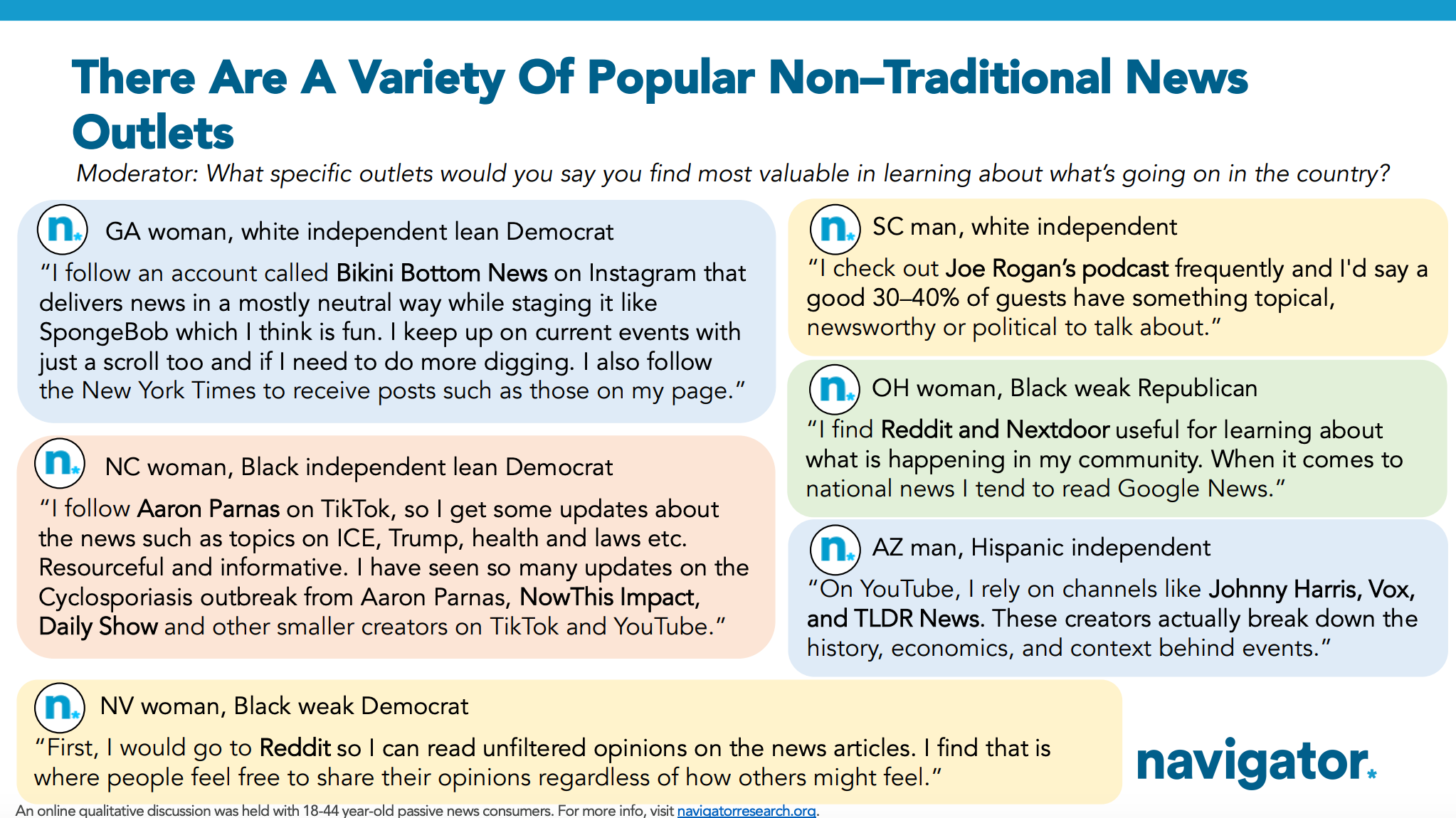
They’re just getting a lot of it from Bikini Bottom News, Nextdoor, and online creators most folks in D.C. are overlooking.
I’d encourage you to read Navigator’s complete findings here. And I hope you get something from this week’s conversation on how left-of-center communicators can reach these important, persuadable audiences.
This is ON BACKGROUND:
5 short questions. 5 quick responses. Featuring the wisdom of Navigator Research Managing Director Melissa Toufanian.
Melissa, if you could force our peers to remember one fact about passive news consumers, what would it be? How should it change the way we communicate with them?
Even people avoiding the news, especially traditional news sources because they’re viewed as too negative or aren’t trustworthy, are accessing information every single day about what’s going on in the country and the world. They’re scrolling social media for hours, listening to podcasts, watching YouTube videos, seeing alerts pop up on their phone, posting on Reddit. So even without seeking out the news they’re staying informed. We set out to hear from “passive news consumers” – those who don’t seek out the news but say the news comes to them. But this research has made me question whether the description of “passive news consumers” is accurate.
This should underscore that any comms strategy needs traditional and new media outreach. This means we as comms people have to work harder than ever! A rollout needs a press conference, press release, X content, TikTok or Instagram creator video collaborations, a Reddit post and more – and it will be most successful when the new media content is creative and can hold attention in a media environment where content of all types is competing to be seen, liked, and commented on.
Your findings suggest we should be doing more with creators, but that not all creator content is equally effective. What should we look for before deciding who to work with?
It’s important to think about the audience you’re trying to reach and the style of the creator’s content you’re considering partnering with. We heard from participants that they like creator content that is entertaining, debunks misinformation or teaches them something. We shared three different creator videos – from Aaron Parnas, Don Lemon, and Dr. Jessica Knurick – and found Dr. Knurick’s video to be most popular with respondents. Many found her credible and compelling, although some who leaned Republican weren’t persuaded.
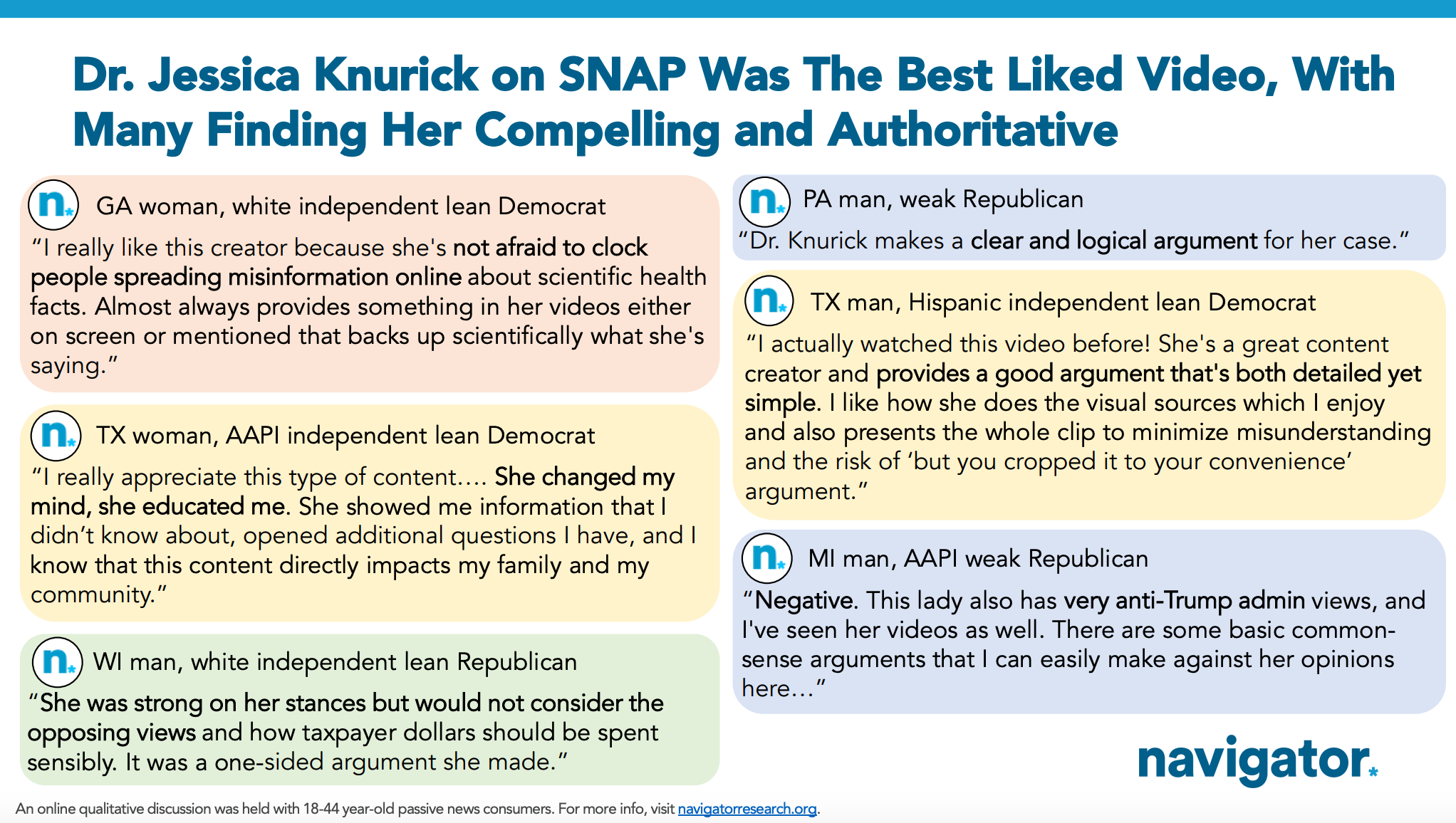
Think about the creator’s following – is it mostly Democrats? Very progressive? Is it a news aggregator that might reach people across partisan divides? How heavily political is their content? Essentially, will you be reaching people already bought in or will you be able to reach a persuadable audience? The latter likely means going somewhere new and, especially for an elected official, stepping outside of their comfort zone.
Does traditional media still matter for reaching persuadable voters?
Absolutely. One respondent told us they read the New York Times and follow Bikini Bottom News to stay informed. People, especially younger Americans, are tuning into traditional news less but also value getting multiple perspectives from different sources. Some say they check MSNOW or CNN and FOX before forming their own opinion. Traditional news outreach absolutely still matters, but can’t be the only outreach or engagement. It has to be one part of a comms strategy that also includes non-traditional / new media outreach. And in this fragmented media environment when you have a good TV news clip or story in a traditional outlet like the New York Times or Washington Post, it’s then critical to do the legwork to promote it: to post across your social media accounts, send it out to stakeholders to be sure they see it, post on Reddit, send out an ICYMI and more.
What do you want to shout from the rooftops about how we can better reach passive news consumers?
Engage in new places and embrace being interesting! People contain multitudes and elected officials should embrace going places outside of typical political channels when trying to reach people who don’t wake up and start their day with Playbook and Punchbowl.
For example, are you an elected official with young kids? Talk to mom or parent creators and weave in how you’re working to lower costs for working families. Do you love to read? Check out BookTok or Instagram creators who post about what they’re reading and pitch an interview where you can share your summer reads. Most important: don’t show up with stale talking points and practiced lines. Authenticity and relatability are key.
When we asked respondents what type of content they wanted to spend more time reading, watching, or listening to, the vast majority listed “content for an elected official” last. Some say it sounds like campaigning and not truthful, so electeds need to think about places they can show up far beyond their own accounts and make those engagements interesting.
And finally, listen to the creators – they’re incredibly knowledgeable about their audience and can be a critical source to better understand how their followers think and feel.
Who should we talk to next?
Talk to a content creator! I’d love to hear how they’re thinking about growing their audience, what style of content does well, and whether they want to engage more with elected officials. I would also love to hear their advice for how comms people should be thinking about working with creators and what supporting the creator ecosystem actually means.
Thanks for your time, Melissa.
Great interview and thanks for linking out to their research. Excited to dive in more